You’ve got sales, you’ve got traffic, but now you’ve got one bigger problem: Cashflow. E-commerce businesses mainly stumble because of cash flow gaps, the disconnect between money going out and money coming back in. This problem is especially acute for Amazon FBA sellers, Shopify brands, and direct-to-consumer stores, where inventory, suppliers, and ad spend all demand cash upfront.
Handled well, these pressures are manageable. Left unchecked, they can sink even fast-growing businesses.
1. Inventory That Locks Away Capital
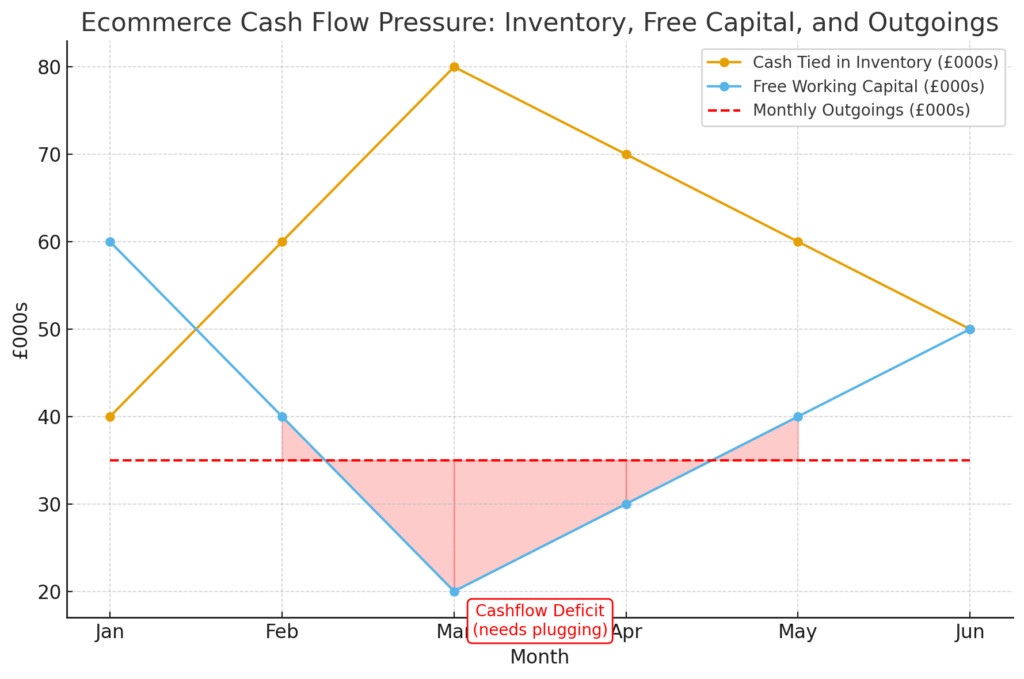
Large stock orders are a reality of ecommerce, particularly for Amazon FBA sellers. You commit cash upfront to suppliers, ship inventory to Amazon warehouses, and then wait while sales filter through the platform’s payout cycle.
That gap creates real strain. Every order ties up thousands in stock before a single pound of revenue lands in your account. Left unmanaged, it slows growth, limits ad spend, and risks leaving you short when demand peaks.
The solution isn’t ordering less, it’s structuring your finance so stock outlays move in step with sales. Tools such as inventory finance, working capital facilities, or specialist ecommerce funding solutions are designed exactly for this purpose: freeing capital for marketing and operations while your stock sells through.
2. Supplier Terms That Pull Cash Forward
Suppliers want their share upfront, often 30–50% as a deposit, sometimes even payment in-full. For international sourcing, that balance is usually due before goods even ship. By then, you’re thousands out of pocket with no sales in sight.
This is where structured finance, for example, trade finance or an ecommerce business loan, becomes critical. These tools essentially cover supplier invoices so you can repay once goods start generating revenue. Without this, suppliers end up dictating your liquidity cycle, and that is not a sustainable model.
3. Marketing Spend That Outpaces Sales
Marketing is the growth engine, but it is unforgiving. Platforms like Google and Meta charge instantly; sales may arrive weeks later. If you’re running ads for Amazon or Shopify stores, the mismatch is even sharper, revenue is tied up in the Amazon payout cycle, not your bank account.
This is why some brands turn to revenue-based finance or flexible ecommerce loans. Repayments rise and fall with sales, giving breathing room to scale advertising without choking operations. In practice, that means keeping campaigns running when they’re working, instead of cutting back because of short-term cash strain.
4. Fees, Returns and the Silent Margin Killers
On a spreadsheet, turnover can look fantastic. A store shows £100,000 in monthly sales, and at first glance it feels like there should be plenty of cash to cover costs and invest in growth. In practice, though, the picture is very different.
Platform fees:
Amazon FBA typically takes 15–20% commission, plus fulfilment fees, storage fees, and advertising costs if you’re running Sponsored Products. Shopify and other platforms add their own payment processing charges on every transaction.
Returns:
Ecommerce carries a higher return rate than most sectors, particularly in categories like fashion, electronics, and homeware. Returns eat directly into cash flow, since funds may already have been spent on marketing or supplier payments.
Shipping and logistics:
Carrier charges, surcharges, and packaging costs mount quickly, and many are paid before customer payments are released.
Payout delays:
Amazon holds onto disbursements for 14 days as standard, and it can be even longer if reserves are withheld. Shopify and PayPal can impose rolling reserves, especially for new or high-risk accounts. That means even after sales are made, you may not see the cash for weeks.
The result is a common trap: a business with six-figure revenues but only a fraction of that actually accessible in the bank at any given time. It creates an illusion of success while day-to-day liquidity remains dangerously thin.
How to manage it:
The discipline here isn’t just funding, it’s financial modelling. You need to track your true cash position, net of fees, returns, and payout lags. When that picture is clear, funding tools can then be applied strategically:
FBA funding facilities designed specifically for Amazon sellers can advance a portion of sales before Amazon pays out, plugging the two-week gap.
Merchant cash advances tie repayments directly to daily or weekly sales, which means you’re not stuck with fixed repayments when cash is being held back by platforms.
Short-term ecommerce loans or revolving business finance lines give predictable liquidity to cover logistics, marketing, or supplier payments while you wait for revenue to settle.
Used correctly, these facilities don’t just smooth cash flow; they allow you to keep reinvesting in stock and marketing rather than pausing growth while you wait to be paid.
5. Seasonality That Creates False Security
The real measure of success isn’t how high you peak in December, it’s how steady you stand in February.
That’s the trap many ecommerce founders fall into. Black Friday, Christmas, Prime Day, these moments can deliver record-breaking revenue in a single month. But those windfalls don’t mean the business is healthy. What matters is what happens after.
Too many treat December profits as surplus, spending freely in January only to discover that sales have collapsed, fixed costs haven’t moved, and cash is vanishing faster than it arrived. By February, marketing is cut, growth stalls, and the business spends half the year clawing back momentum.
The stronger operators understand that you can’t judge success by a good month. They treat peak-season profits as fuel for the growth in the quieter months that keeps acquisition running and customers engaged year-round. When liquidity is smoothed across the calendar, January isn’t a crash, it’s just another month of steady growth.
That’s where tools like seasonal funding lines, revolving facilities, or tailored ecommerce business loans come into play. They aren’t there to cover losses, they’re there to ensure growth doesn’t stop just because the calendar flipped. In practice, it means you can sustain marketing spend, restock intelligently, and avoid the “stop-start” cycle that kills so many otherwise promising brands.
The Bottom Line
Cash flow problems in ecommerce are not random, they follow predictable cycles: inventory, suppliers, marketing, fees, and seasonality. Recognising these cycles is half the battle.
The other half is aligning your finance strategy, whether through an ecommerce loan, working capital facility, or Amazon FBA funding, to keep cash available when it matters most.
Done properly, funding isn’t a crutch; it’s a lever. It allows you to buy smarter, advertise harder, and ride seasonal peaks without crashing in the troughs. That’s how growth becomes sustainable.
Why Work With Finspire Finance
At Finspire Finance, our founders each bring nearly a decade of experience working with businesses of all shapes and sizes. Over those years we’ve built a deep understanding of ecommerce models, Amazon FBA sellers, and online-first businesses, not just the funding options available, but the operational pressures that make timing and structure so critical.
We know that every business is unique, which is why we provide free phone consultations. These are an opportunity to talk through your current position, run a quick health check of your company, and help you understand what you may be eligible for before you even start an application.
Explore the full range of options in our 2025 Guide to Ecommerce Funding Solutions or get in touch to schedule a consultation.