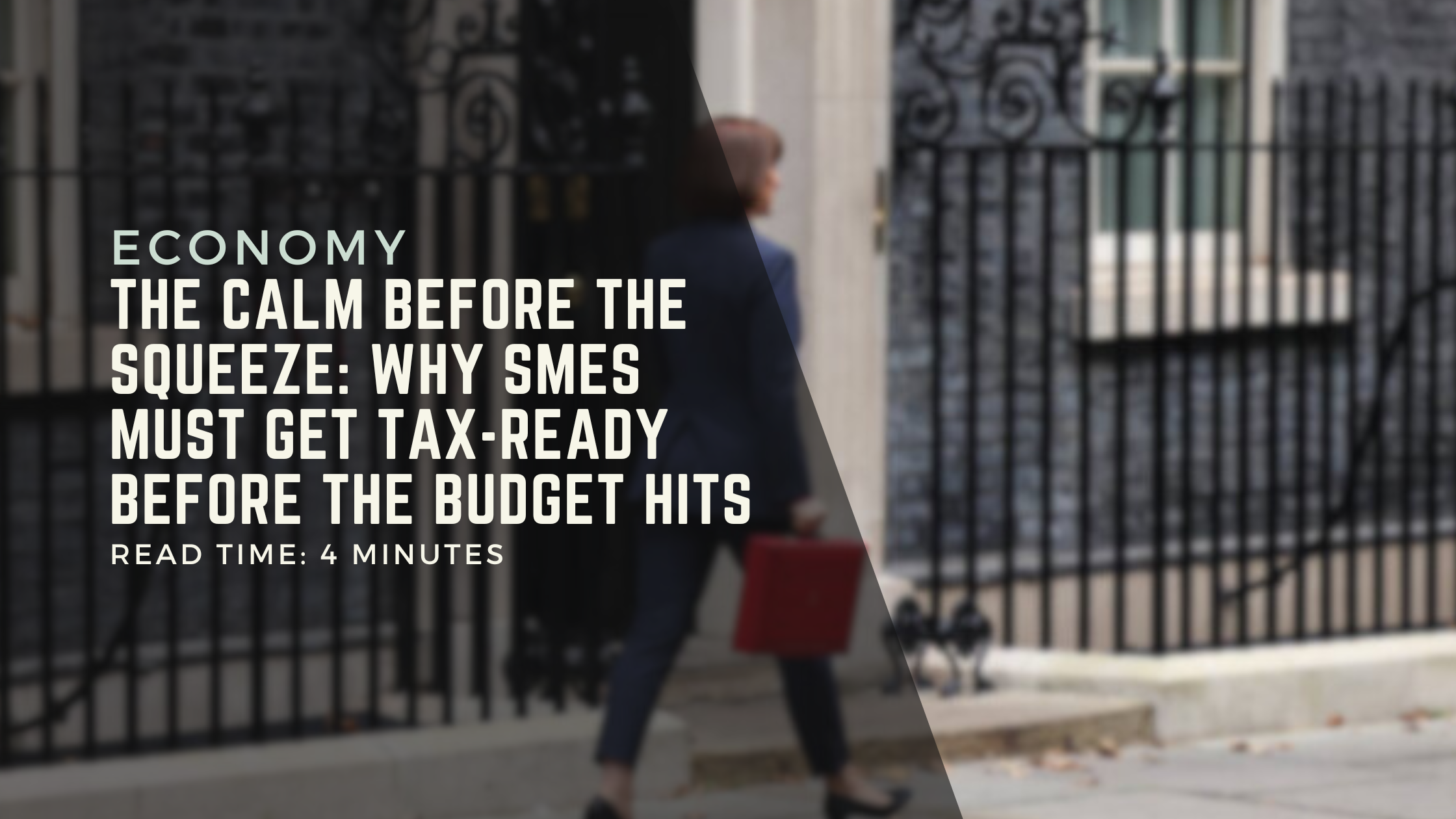
It will be a Budget led by fairness and opportunity… I will make the choices necessary to deliver strong foundations for our economy.
Translation: taxes are going up.
Markets already believe it; the pound slipped, yields jumped, and every analyst in the City quietly underlined the same phrase, “necessary choices.”
In government language, that means someone’s about to pay. The question is who.
Who’s About to Foot the Bill?
Reeves has refused to say which taxes, but every signal points toward revenue-raising outside the big three (income tax, VAT, and National Insurance). This means we are more likely to see corporation-tax tweaks, capital-gains adjustments, and reduced reliefs on investment income.
If you’re a small-medium sized business owner, don’t exhale yet. When governments chase billions, they rarely aim at the giants first. They go for what’s administratively easy, which is the compliant, the visible, the small-to-mid-tier businesses that already play by the rules.
In other words, probably, you.
An Overview of Our Current System
0.2 % of companies (the “large” ones) generate nearly half of all UK business turnover.
HMRC’s “Large” Business Directorate, covering just a few thousand firms, accounts for around 40% of total UK tax receipts.
Everyone else, the plumbers, manufacturers, agencies, logistics firms, shop owners (in other words, probably, you) fights for the other half, carrying the same regulatory weight as the “large” giants, but with a fraction of the muscle.
So even if the headline rise is “targeted at the top,” the pressure cascades down. Supplier price hikes, higher payroll costs, tighter credit appetite, it all trickles onto the very businesses that form the back-bone of British business.
That’s why the smart money isn’t waiting for the Budget to land. It’s preparing for it.
Before the Storm: Your Advantage
Right now, your books tell a good story. Revenue stable, tax filings current, margins still reasonable. This is the moment to move.
Lenders and investors aren’t moved by speeches or slogans, they’re moved by evidence.
Filed CT600s, VAT returns that reconcile perfectly, a clean PAYE record, management accounts that make sense line by line, that’s what wins approvals when capital tightens.
When the Budget Drops
The day after 26 November, rates won’t suddenly skyrocket, but behaviour will change in the wake of Westminster decisions.
Lenders will ask for “a little more comfort.” Credit committees will lengthen their checklists.
And if your last 12 months look thinner thanks to new taxes or slower growth, that once-easy renewal will turn into a re-underwrite.
Which is why the shrewd move is to secure, or extend, your facilities while your numbers still shine.
How to Stay Two Steps Ahead
1. Know Your Numbers, Not Just Your Tax Bill
ROCE ( Return on Capital Employed ): show that every £ of capital you deploy earns more, even after higher tax.
ROA ( Return on Assets ): prove your assets actually work for you, higher utilisation, quicker debtor days, smarter stock cycles.
High ROCE and ROA aren’t just financial jargon; they’re lender catnip. They tell underwriters, “this business can absorb a fiscal hit.”
2. Build a Tax-Track Record Pack
Pull it together now, not when a credit analyst asks:
Latest CT600, VAT returns, PAYE schedules, reconciliations
13-week cashflow with HMRC payment dates ring-fenced
Forward P&L showing post-tax margins
Short commentary on any one-offs or timing quirks
A neat, current pack says more about your professionalism than a 20-page pitch deck ever will.
3. Refinance While You’re Still in Bloom
Don’t wait for the Chancellor’s red box to slam shut.
Extend your revolving facility, renew your invoice-finance line, or upgrade your asset finance now. After the Budget, every lender may potentially be tightening belts, you want your name on the “already approved” list.
4. Use Finance to Shield, Not Stretch
If taxes rise, your margins shrink.
So make your capital work harder: automate choke-points, pre-buy inventory before price uplifts, refinance high-cost short-term debt into structured working capital.
Funding used this way doesn’t add risk, it buys resilience.
Fairness, Meet Reality
The word “fairness” will headline every soundbite this month. But in practice, policy fairness rarely feels fair on the shop floor.
Small and mid-sized firms already carry the payroll, the VAT, the suppliers, and half the nation’s private-sector jobs. They don’t need sympathy; they need liquidity. And liquidity starts with credibility, the kind only clean, current tax affairs can buy.
The Takeaway
Taxes are rising. The smart firms aren’t complaining; they’re pre-empting.
They’re reconciling now, and locking in capital while they still look strong.
Because when the Chancellor asks the country to “do its bit,” the businesses that already have their house in order will be the ones banks line up to back.