The UK economy is carrying a visible confidence gap as young people are facing a harder route into work. Furthermore, many adults with available savings are holding money in cash because they fear loss, lack knowledge, or feel unsure about financial decisions. Business owners are operating in the same climate, balancing higher costs, tax liabilities, supplier pressure, customer demand and hiring plans.
The House of Commons Library’s latest youth unemployment briefing reported that 729,000 young people aged 16 to 24 were unemployed in January to March 2026. The youth unemployment rate was 16.2%, up from 14.2% a year earlier, and around 190,000 higher than before the pandemic.
A separate House of Commons Library briefing on financial advice highlighted a different version of the same caution. The FCA found that 61% of UK adults with £10,000 or more in investible assets held all or most of those assets in cash. Over half of people with £10,000 in cash savings who did not receive financial advice had never thought about investing.
This matters for business owners because confidence and economic trends drive economic activity. A business owner’s decision to hire, buy stock, upgrade equipment, invest in systems, take on larger contracts or expand premises often depends on the same underlying question: does the risk feel manageable?
A cautious British economy rewards structure, and business owners do not need blind optimism to succeed. They need clearer cashflow planning, suitable finance and a disciplined view of where capital can produce measurable returns, even if it means diversifying their investments.
The UK confidence gap is visible in jobs and money decisions
Youth unemployment often moves with wider labour-market conditions. The research briefing on Youth Unemployment Statistics released on 19 May 2026 by the Commons Library shows youth unemployment peaking after the 2008 financial crisis, falling between 2011 and 2019, rising during the Covid-19 pandemic, falling to a record low in 2022, then gradually increasing again.
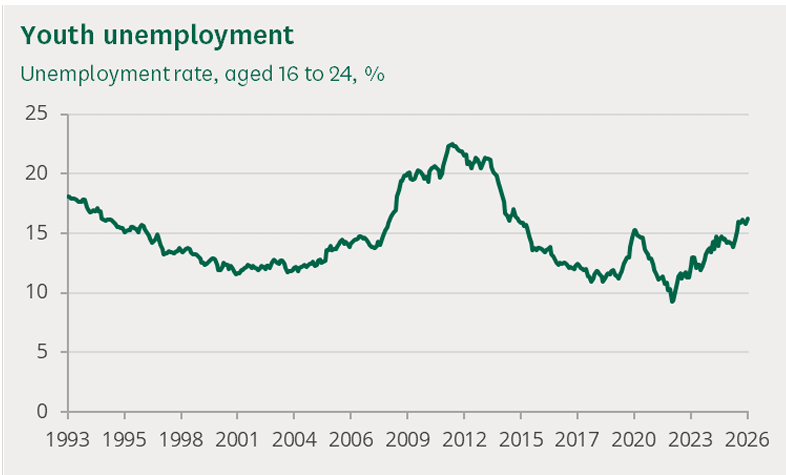
That pattern places employer demand at the centre of the discussion, which is directly related to SME confidence. While education, skills and work ethic still affect individual outcomes, wider business conditions also decide how many entry-level roles are available. A young person can be qualified and motivated while facing a market where employers are delaying recruitment.
The report also shows unemployment affecting young people both inside and outside full-time education. In January to March 2026, the unemployment rate for 16-to-24-year-olds in full-time education was 20.3%, compared with 14.6% for those outside full-time education.
The Financial Advice research briefing released on 29 May 2026 by the Commons Library also includes data that shows caution from another angle. UK individuals are less likely to invest compared with individuals in some other countries, with many holding savings in cash. The report explains that cash savings have a role, although cash generally offers lower long-term returns than shares and can be eroded by inflation.
Together, these reports point to a practical commercial issue that business owners should be very mindful of. When people are unsure, they hold back. Households hold cash. Businesses delay investment. Employers postpone hiring. Young people then face fewer early-career opportunities. Local economies feel the effect through weaker income, weaker spending and slower growth.
Why youth unemployment matters to businesses
Youth unemployment is often treated as a social issue. It is also a business issue.
Many small businesses rely on younger workers for entry-level roles, apprenticeships, customer service, administration, logistics, hospitality, retail, construction support and digital tasks. These jobs give young people experience, confidence and workplace discipline. They also give businesses a future pipeline of supervisors, managers and skilled staff.
The Youth Unemployment Statistics briefing reported that 957,000 young people aged 16 to 24 were not in education, employment or training (NEET) in October to December 2025, equal to 12.8% of that age group. The report also states that NEET rates have been rising since 2021.
A higher NEET rate can become a long-term problem for local business ecosystems. Young people outside work and training lose experience. Employers face a narrower pool of job-ready applicants. Local spending power weakens. Businesses in high-street sectors, hospitality, care, construction, logistics and services feel this through both labour supply and customer demand.
Small businesses cannot solve youth unemployment alone, nor should they be expected to. But, they can create many of the practical routes young people need. This, however, requires liquidity, planning and confidence.
A business that has a clearer view of its cashflow can make hiring decisions earlier. A business with suitable finance can take on a new contract, fund stock, invest in equipment or recruit before capacity becomes stretched. A business that delays every decision until “certainty” returns may protect cash in the short term while losing ground commercially, and losing value from their hoarded cash through taxation and inflation.
Cash reserves protect businesses, then trapped cash can restrict growth
The FCA’s finding in the Financial Advice briefing by the Commons Library found that 61% of UK adults with £10,000 or more in investible assets hold all or most of those assets in cash. This shouldn’t simply be considered a personal finance statistic as it reflects a wider preference for safety when confidence is fragile that sets a common trend across all verticals in society.
The most obvious example is that business owners often behave in a similar way inside their businesses. They hold cash for sensible reasons: VAT, Corporation Tax, PAYE, payroll, rent, energy, supplier payments, repairs, seasonal gaps and unexpected shocks. After several years of inflation, higher interest rates and cost volatility, liquidity has become a form of protection.
The evidence also shows why the issue needs balance. In late June 2025, ONS data showed that 16% of trading businesses reported having no cash reserves, the highest proportion recorded since the question began in June 2020. In contrast, 26% expected their cash reserves to last more than six months.
Those two figures describe very different business realities. Some businesses are exposed to immediate cashflow pressure. Others have built meaningful buffers. For the second group, the commercial question becomes one of allocation, and the question of overcautiousness needs to be addressed.
A reserve should have a purpose. Some cash protects the business. Some cash may be better used to reduce expensive debt, improve productivity, fund equipment, strengthen stock levels, support marketing, upgrade systems, hire staff or prepare for expansion. Investment decisions involving personal wealth, company reserves or wider portfolios should involve appropriately regulated professional advice where required.
The key point for business owners is deliberate allocation. Cash held through fear can become inactive capital that passively loses value each day. Cash held with a plan gives the business flexibility, and purpose. The stronger position is to define the level of reserve needed for resilience, then assess where surplus liquidity can create commercial return, even if it means diversifying surplus cash into other assets, stocks or properties that differ from the core business that generated the capital.
The advice gap has a business finance parallel
The Financial Advice briefing focuses on personal investments, pensions and retail investing. It says only 9% of adults received regulated financial advice, while the FCA estimates that over 20 million consumers are underserved by advice and guidance markets.
The report also explains the “advice gap”: many consumers sit between generic information and full regulated advice. Guidance can explain the basics, while full advice can be too costly or too extensive for simpler needs.
Business owners face a comparable practical gap in commercial finance and capital allocation. They are often deciding not simply how to fund today’s requirement, but how to use capital more effectively to support growth, resilience and long-term wealth creation.
A business owner can read about business loans, invoice finance, asset finance, tax funding, working capital, commercial mortgages and refinancing. That information explains product types. It rarely answers the commercial question that matters most: which structure fits this business, this cashflow profile and this repayment source?
The answer depends on use of funds, trading history, debtor quality, margin, seasonality, asset base, tax position, credit profile, management accounts and forecast income. A facility that supports one business can create pressure for another.
This is where commercial finance guidance matters more than some people give credit. Businesses rarely need more product labels or social media buzzwords. They need a route through the options that understands their income and works with their repayment capacity.
A business with unpaid invoices may need debtor-led finance. A business buying machinery may need asset finance. A company facing a VAT or Corporation Tax liability may need structured tax funding. A business with rising demand may need working capital for stock or contract delivery. A company carrying expensive short-term debt may benefit from refinancing before repayment pressure restricts trading.
For business owners looking to deploy retained profits into other areas, such as commercial property, equipment, acquisitions or wider investment planning, the same principle applies. The first step is understanding which finance tools are available, how they work, what risks they carry, and whether they align with the owner’s commercial objectives and risk appetite. Where decisions move into personal investment, pensions, tax structuring or regulated financial planning, appropriately qualified professional advice should be taken.
How businesses can invest without taking reckless risks
Growth requires discipline. The aim is to avoid two extremes: hoarding cash until opportunities pass, and borrowing without a clear repayment route.
A sensible financial decision should start with the commercial purpose. The business needs to know exactly why funding is needed and how the return will appear. That return may be increased revenue, improved margin, faster delivery, reduced debt cost, improved tax position, stronger working capital or better operational capacity.
The repayment source should also be obvious and secure within a tolerable risk level. If funding supports stock, repayment should align with sales conversion. If funding supports invoices already raised, invoice finance needs to fit the debtor cycle. If funding supports equipment, repayment should reflect the useful life and productivity value of the asset. If funding supports a tax liability, the structure should match trading receipts and avoid placing excessive strain on working capital.
Businesses can use finance more effectively by asking:
- What is the funding for?
- How quickly will the benefit appear?
- Which cashflow will repay the facility?
- What happens if customers pay late?
- What happens if sales arrive slower than expected?
- Does the facility protect working capital?
- Does the borrowing strengthen the business after repayments are included?
These questions turn borrowing from a reaction into a planning tool.
Why confidence should be built through action
Confidence rarely returns across the economy all at once. It builds through decisions made by households, lenders, suppliers and businesses. For business owners, waiting for complete certainty can become a defence for inaction. The stronger approach is to define the risk, protect the right level of cash, and invest where the commercial return is clear.
That may mean a retailer funding stock ahead of a seasonal opportunity, a contractor financing materials for a confirmed project, or a manufacturer upgrading machinery to improve output. It may mean a logistics business refinancing vehicles to reduce monthly pressure, a hospitality business improving its premises before peak season, or a professional services firm hiring junior staff once recurring income supports the salary.
These decisions create activity > Activity supports employment > Employment supports income > Income supports demand.
Small businesses sit close to this cycle because they operate in local markets, employ local people and respond quickly to changing conditions.
The youth unemployment data shows the importance of keeping routes into work open. The financial advice data shows how caution can leave money idle. The ONS business data shows that cash resilience is uneven, with some firms exposed and others holding longer reserves.
For businesses, the opportunity is to move from defensive caution to structured confidence.
To reiterate, this does not mean spending cash because it is available. It means treating cash as part of a wider capital plan. A business can protect its reserve, use external finance where appropriate, invest retained profits where returns are clear, and seek advice where personal or corporate investment planning sits outside ordinary business finance.
Final thoughts: Businesses can turn caution into structured growth
The UK is showing signs of a confidence gap. Young people are facing a harder route into work. Many adults with investible assets are holding cash. Businesses are making decisions in a market shaped by cost pressure, tax pressure, uncertain demand and uneven cash reserves.
Caution does have value as it protects businesses, and individuals, from shocks. However, It becomes restrictive when it prevents investment, hiring, productivity improvement or sensible restructuring.
Businesses can respond by making capital more deliberate. Hold the right level of cash for resilience. Use finance where the repayment source is clear. Reinvest where the commercial return is measurable. Seek regulated advice where wider investment or personal financial planning is involved.
The cautious economy many describe in the UK does not remove the case for growth. It raises the standard of decision-making required. For businesses, the opportunity is to replace hesitation with structure: protect cash where it is needed, use finance where it supports a clear return, and keep making the decisions that create capacity, employment and long-term value.
Speak to Finspire Finance
Finspire Finance supports businesses in assessing funding options across working capital, tax finance, invoice finance, asset finance, commercial property and wider business funding. For businesses considering investment, recruitment or cashflow support, the right structure can turn uncertainty into a practical growth plan.